|
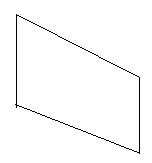 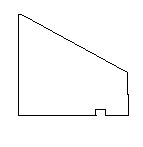 
Bottom pitched
for
Bottom straight,
a
drip
drip
groove
keeps
water
from
running
back
Water running down will take it's course in
deterioration in due time-look at the Grand Canyon.
Also for stucco, brick or other materials that aren't
waterproof water can soak through behind the wall
prematurely deteriorating the material. Lack of groove
or angled drip actually deflects water between the
sill and the wall.
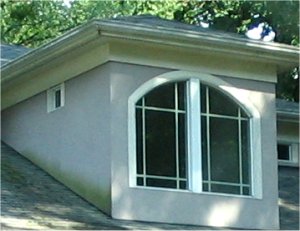
No sill at all on this EIFS dormer is asking for
trouble-
No sill and the band are the Trend these days.
One argument I heard from an architect defending lack
of sills on a multi-million dollar renovation is he
wanted the "clean look".
What looks clean about soot and dirt running down and
staining the
wall, or discoloration ? Also a wet wall promotes the
growth of moss, and traps other airborn dirt and
grime.
 |
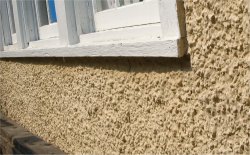 |
New stucco addition we recently finished
had no sills on the plans. |
The original house had sills, with
a drip groove and an angled bottom. |
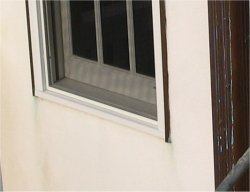 |
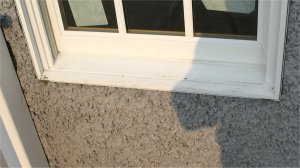
Stucco addition on the house next door was
done the same way-no sills even though the
existing house had good sills. Note how water
runs right between the window and the stucco.
I would guess this addition was built in the
last 20 years, and the original house about
1925. |
Unfortunately, I have very little control over the
lack of sills, all I can
do is make a suggestion. It seems like not much work
running off
some 2 x 2 or whatever lumber on a table saw and
cutting to length
and nailing on the wall.
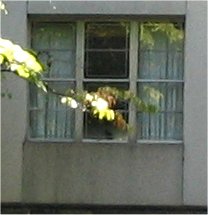 |
Is this the "clean
look"? No sill on this nice
stucco installation is badly stained. A window
sill could have pevented this. |
Sometimes we make stucco sills, when directed, but
stucco really isn't that reliable as material for
sills or horizontal surfaces. The stucco really isn't
that water resisant, and is subject to easy staining
and discoloration.
In the future, we plan to put on a protruding
flashing below the window,
like Mr. Bad Stucco has on his site.
|