Stucco over painted block, brick
Stucco over painted block, brick or stucco by chipping the block. I call this our chipping and bonding method.
Chipping up the wall is a variation of an old method that seems to work the best for us. Sand blasting is a real chore and not cheap. Usually, sandblasting leaves a dust cloud that looks like a fire in the distance. Sandblasting is dangerous, both to health and property, and in some places, illegal. Illegal with good reason.
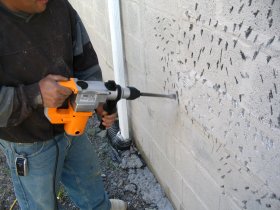
Here paint is chipped off using a chipping hammer. Deep holes don't matter. They have a better key for the mortar.
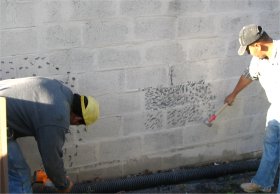
A race between a hatchet and an electric chipping hammer shows the hatchet is almost as fast. It is good to have a grinder on the job to sharpen the hatchet or bits once in a while.
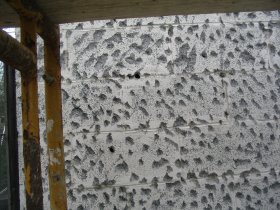
Ready for mortar. Chips leave areas both rough and porous for a permanent bond.
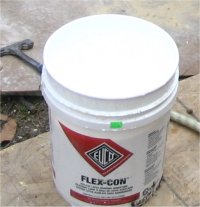
Flex con is used for additional adhesion. Flex con is an acrylic bonding admixture. We mixed flex con half and half with water and mixed it into the dry mixed mortar. The acrylic not only is adhesive for a good bond, but is resistant to cracks and adds strength.
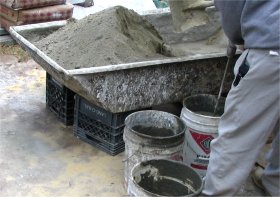
Here the dry mix is mixed with the wet mix with a drill. Mixing with a drill isn't really necessary, but the mortar spreads easier.
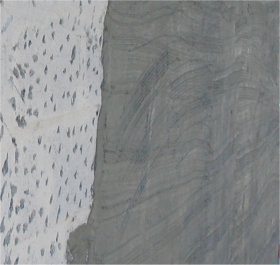
Scratch coat is applied with a lot of pressure to give a good squish into the holes. Scratch coat is scored and allowed to set 2 days before the brown coat. This a very solid, very durable bond.
Paint on bonding agents seem to fail over time, At least all the work we have done with them on the outside (over painted surfaces) eventually popped off the wall. The reason paint on agents fail on the outside of a building is because they dissolve in water. The reason they work to begin with is that the surface dissolves when wet plaster or cement mortar is applied. The mortar then mixes with the bonder and dries together, forming a chemical bond.
We have had a lot of cracks nailing metal lath over the painted block. I think the reason we have excessive cracking with lath is the paint forms a "slip joint", or an area where mortar fails to bond. The stucco expands and contracts one way and the block or brick another way, causing a lot of cracks. Nailing lath on block is also a slow and expensive process. Even with stub nails or pin set pins the lath doesn't seem to be attached as well as putting the mortar right on the block. Nailing brick is unreliable. The nails break up the brick, leaving the only resort of driving nails into the mortar joints.
Most of the area of the block is chipped up, leaving the pores open on the blocks for a good bond. A few holes don't hurt, mortar squished into these holes form a good key for the slab. We have had very few or no cracks at all using this method.